Lot #049
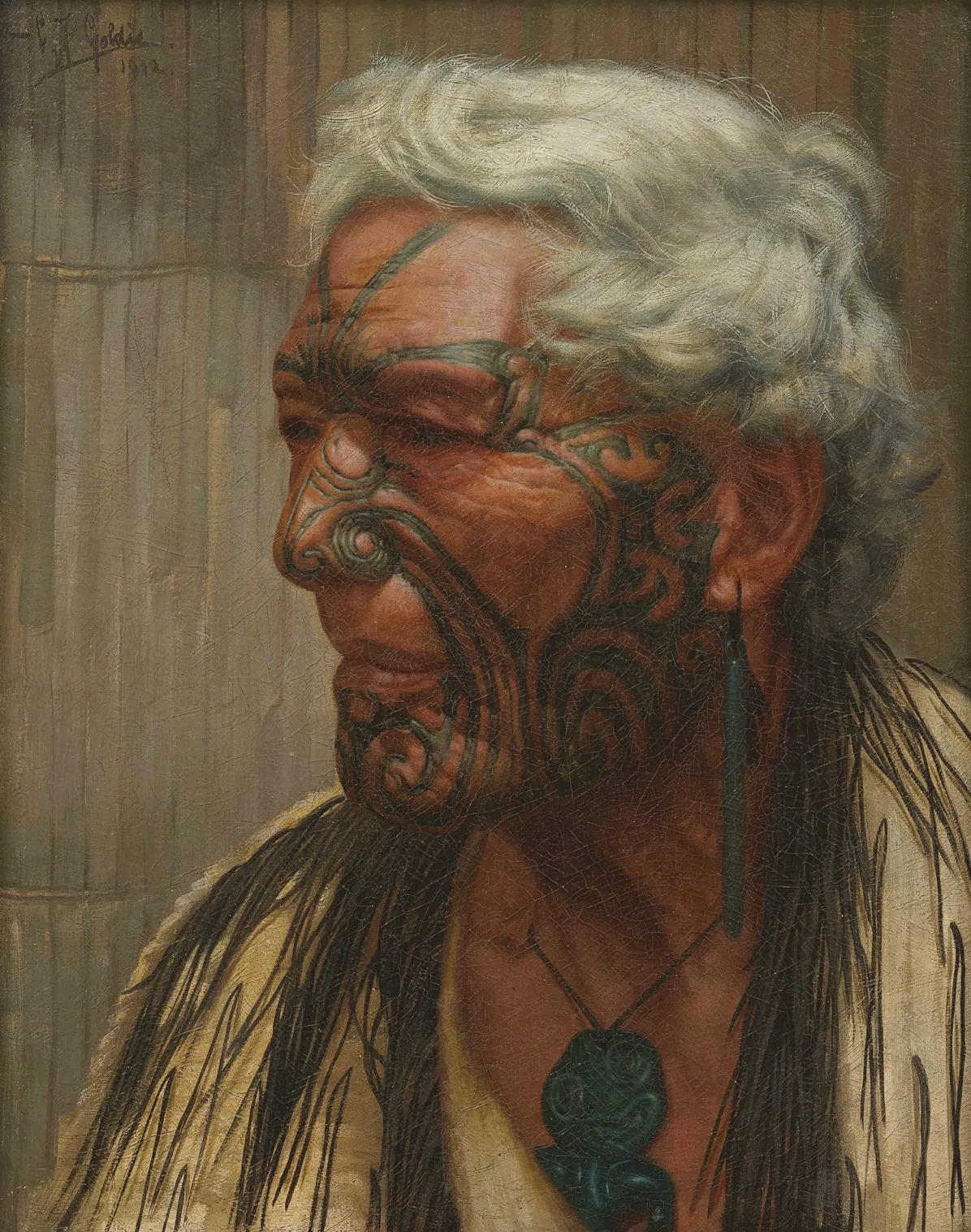
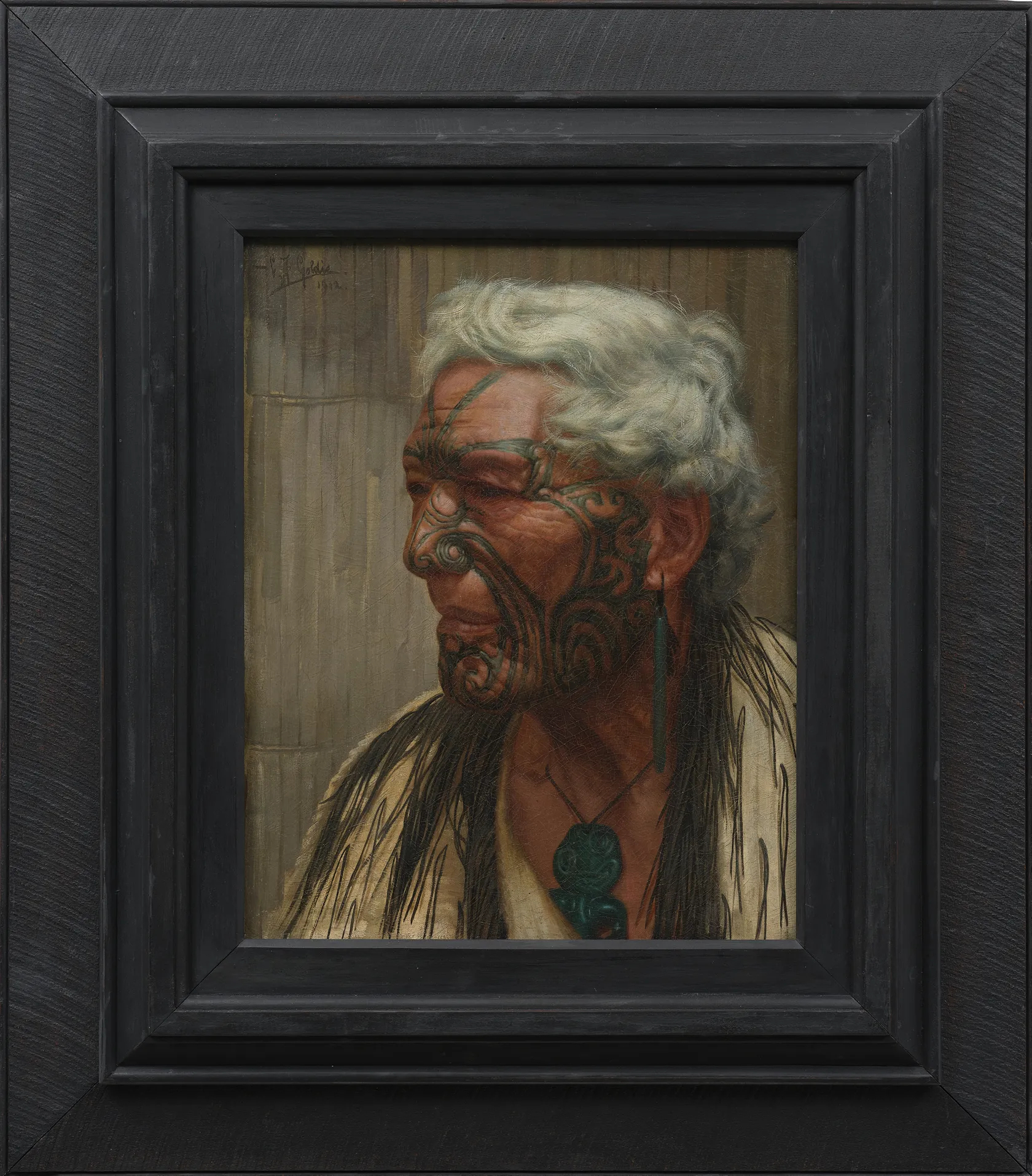
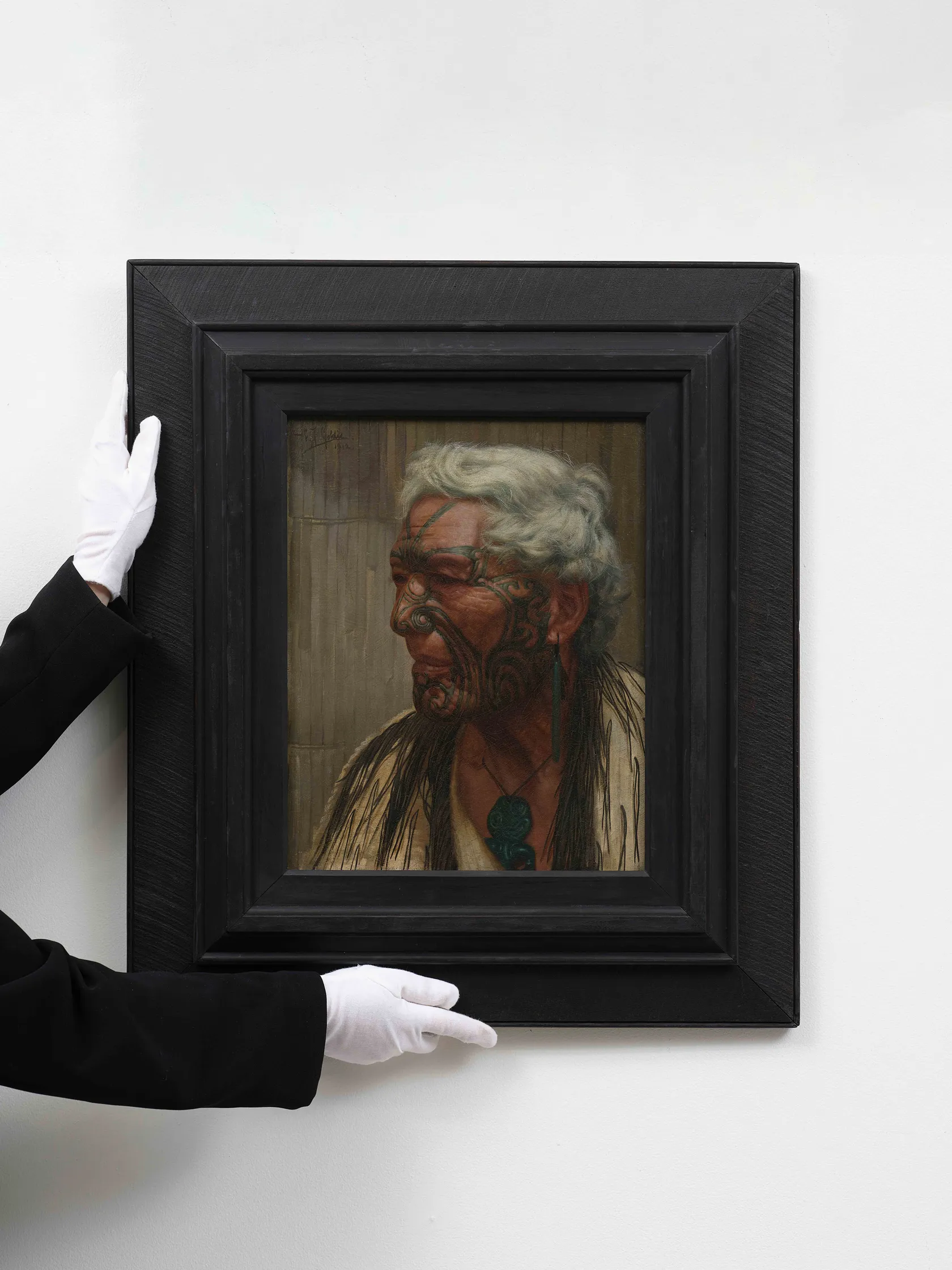
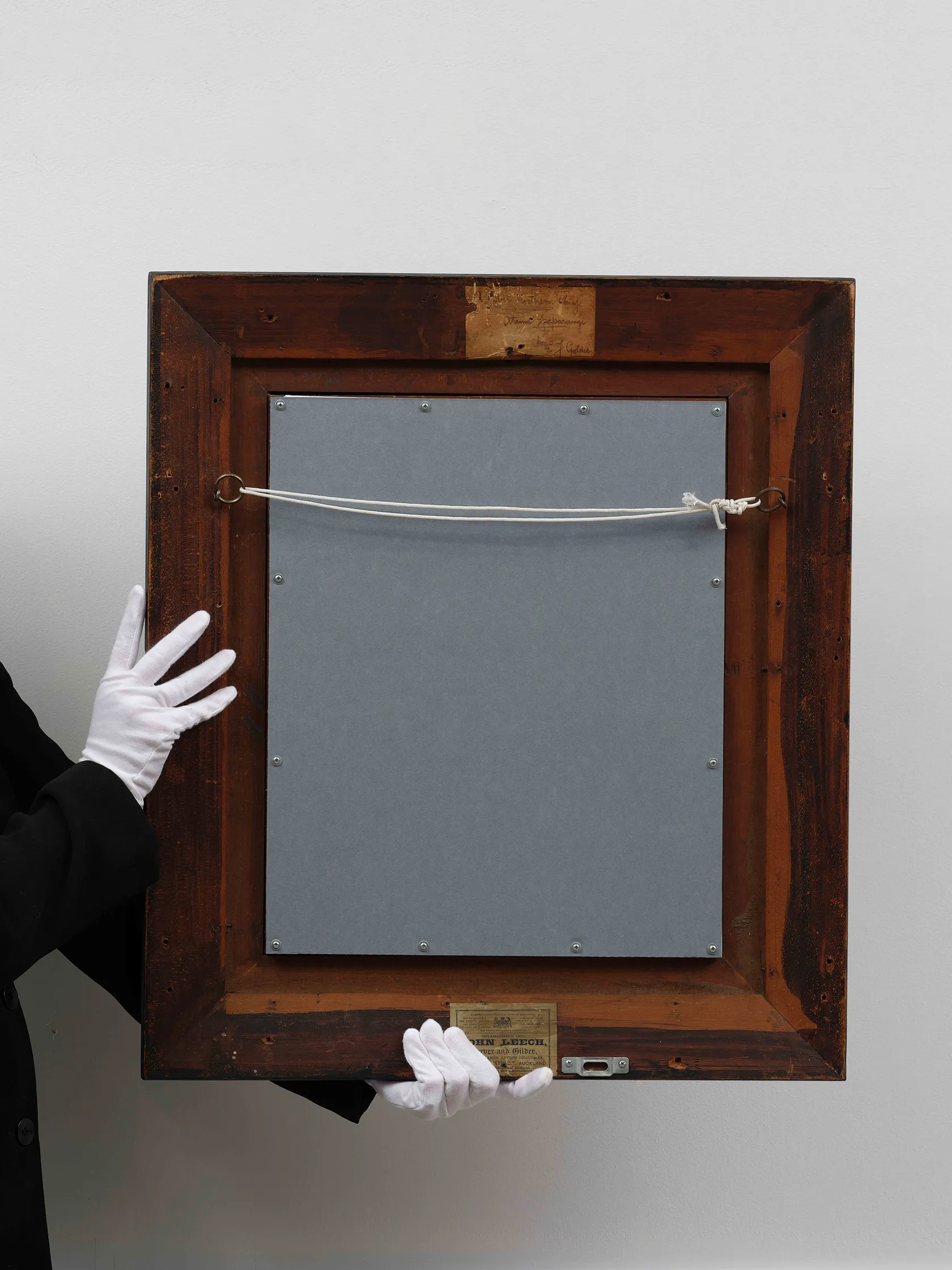
A Noble Northern Chief, Atama Paparangi
Oil on canvas laid on board
37 x 29 cm
Estimate NZ$800,000 – NZ$1,200,000
Signed & dated 1912
To request a condition report, please contact us at auctions@artcntr.co.nz or phone +64 9 379 4010
Auction Details
Literature
C.F Goldie, His Life & Paintings, Alister Taylor & Jan Glen, 1977, p. 223
Few artists have shaped New Zealand’s visual identity as profoundly as Charles Frederick Goldie. Trained in the rigorous academic tradition of late-19th-century Paris, Goldie brought exceptional technical precision to his portraits of Māori rangatira, kuia and tohunga. The two works presented here, A Noble Northern Chief, Atama Paparangi (1912) and Rahapa Hinetapu (1924), are exemplary expressions of his mature style,
uniting disciplined craftsmanship with a deep respect for his sitters.
Born in Auckland in 1870, Goldie was the second of eight children to David Goldie, a prominent timber merchant and later Mayor of Auckland, and Maria Partington. His artistic talent was recognised early at Auckland Grammar School and the Auckland Society of Arts. He went on to study under Louis John Steele, who instilled in him a respect for the European academic tradition. With encouragement from Sir George Grey, and his father’s consent, Goldie left for Paris in 1893 to study at the Académie Julian. There, under the guidance of William-Adolphe Bouguereau and other leading Salon painters, he developed the technical precision, tonal mastery, and disciplined draughtsmanship that would define his later work.
In 1898, fully informed in the French academic style, Goldie returned to New Zealand and began collaborating with his former tutor Louis John Steele. The two worked on a number of paintings including Arrival of the Māori in New Zealand, a large scale historically-themed painting after Gericault’s Raft of the Medusa. Before long, the relationship deteriorated, likely caused by tensions around the former student’s growing success. Goldie went on to open his own studio, quickly establishing himself as a successful portraitist of Māori.
From 1900, Goldie devoted himself to painting elderly Māori whom he regarded as custodians of ancestral knowledge. His field trips to Rotorua and Northland brought him into contact with many of his key subjects, whom he painted repeatedly over decades. His intent, as he described, was to record their likenesses
as they were.
A Noble Northern Chief, Atama Paparangi (1912) depicts the leader of the Taomauī hapū of Te Rarawa, based at Mitimiti in Northland. Born c.1817, Atama fought alongside Tamati Waka Nene. Goldie renders the sitter with quiet authority and meticulous detail, the sitters furrowed features emerging through a softly modulated light. Goldie returned to the subject repeatedly, producing later versions, one of which was titled An Aristocrat, which was shown at the Royal Academy, London, in 1934 at Lord Bledisloe’s invitation, receiving particular praise for its dignity and composure.
Rahapa Hinetapu (1924) depicts a Te Arawa chieftainess wearing kuru pounamu earrings shaped as inanga (whitebait). The jewel-like composition reveals Goldie’s more relaxed late-career palette and confident economy of touch. Painted during a period when his focus turned to smaller, more personal works, it captures an immediacy of presence rare in his oeuvre. The sitter’s calm gaze balanced against the artist’s controlled handling of paint, textile and ornament.
Goldie’s art was both acclaimed and contested in his lifetime. His paintings commanded record prices and international attention, yet his portrayal of Māori elders through a colonial lens continues to invite critical reassessment. What endures beyond debate is the technical brilliance and psychological depth of his portraits.
By his death in 1947, Goldie had created a body of work that remains central to New Zealand’s cultural record. The portraits of Atama Paparangi and Rahapa Hinetapu represent not only a pinnacle of his achievement but also an enduring testament to his belief in the power of portraiture. More than a century on, these works continue to stand as vital historical records and as examples of portraiture at its most exacting and sincere.
Provenance
Private Collection, Auckland c. 1998
Acquired from International Art Centre
Gwen Hunt Collection, Auckland by descent
Max & Gwen Hunt Collection, Auckland
Acquired by Private Treaty
Sold by International Art Centre, c. 1977
Collection of Grahame Chote, c. 1970s
Lot #049
A Noble Northern Chief, Atama Paparangi
Send Enquiry
Lot #049
A Noble Northern Chief, Atama Paparangi