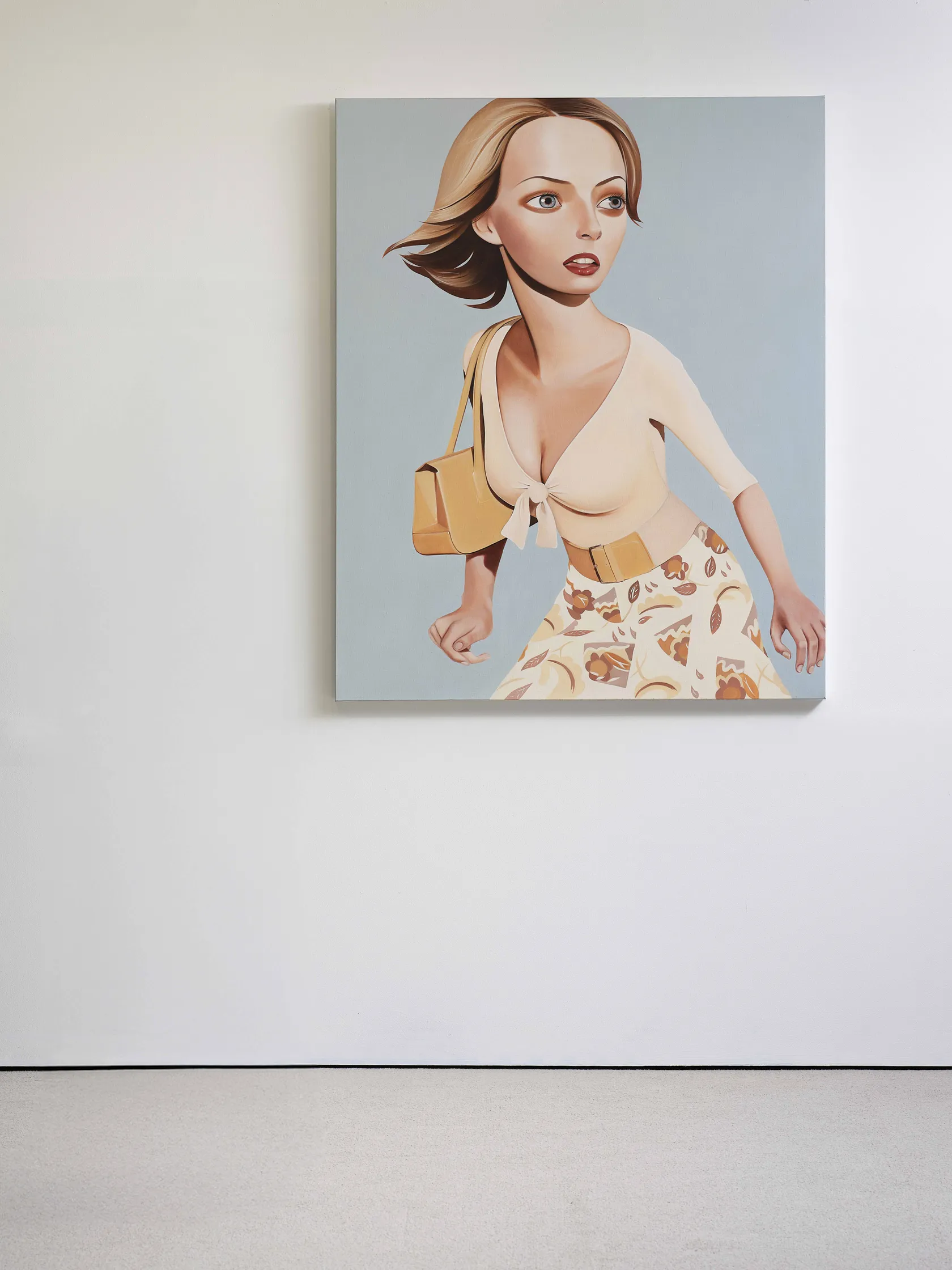
Savannah
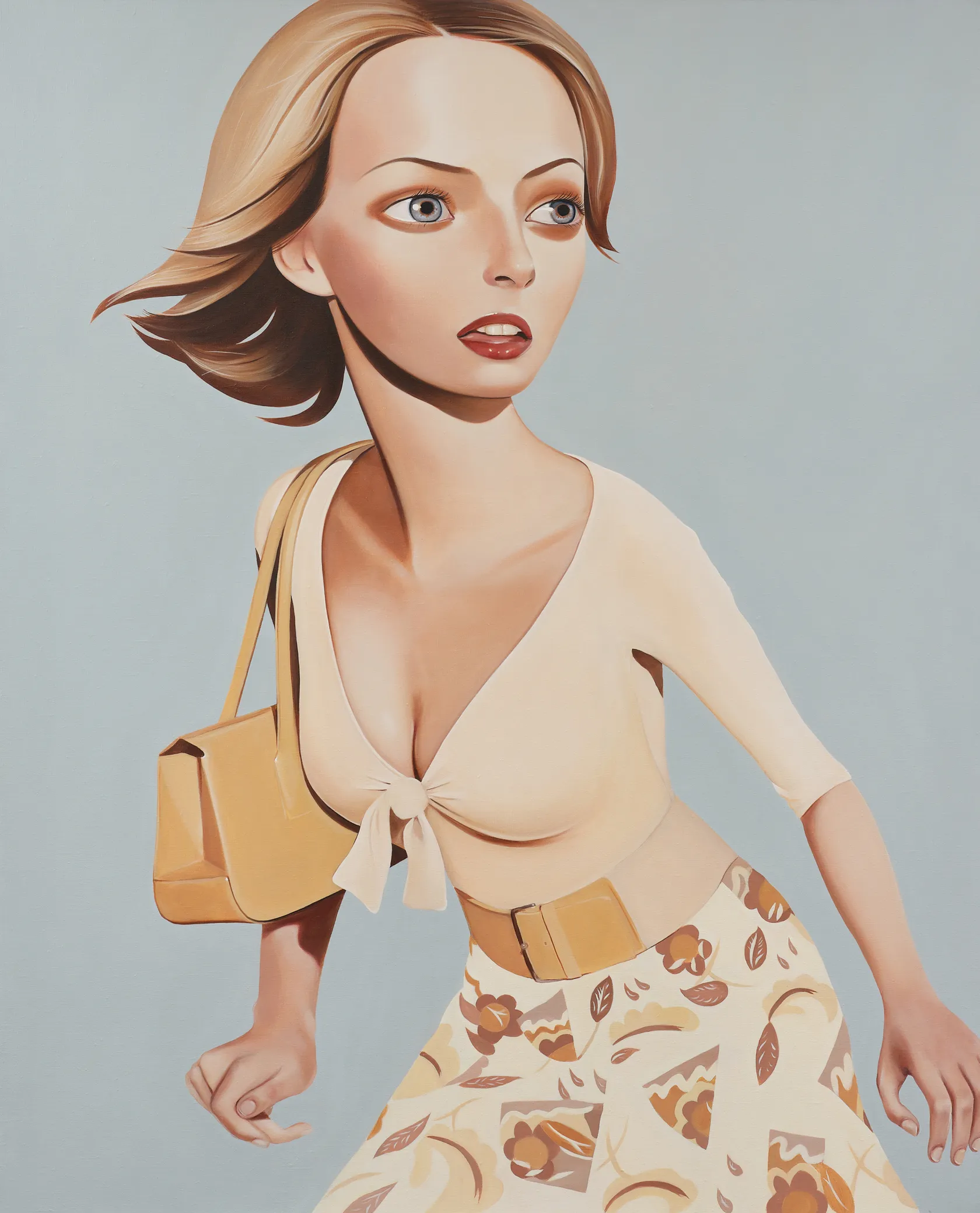
It is a classic example of what curator and writer Justin Paton refers to as paintings of the blank and beautiful for the age of appearances. Despite her sunny name, Savannah appears here not to be warm and relaxed. She is in a hurry, perhaps being pursued. The artist has depicted her three quarter length, glancing back over her left shoulder, her whole body in motion. Carefully coloured and layered hair is flying in the wind and her hands are starting to clench into fists. Notwithstanding her agitation, she remains a poster child for the clean girl aesthetic, her cappuccino complexion flawless with just a trace of bronzer on her high cheekbones, glossy lips parted to show whitened teeth and smokey shadows enhancing her clear blue eyes. Whatever has caught her attention is just out of sight but remains threatening - she is not running for the bus. A narrative is implied: one we can conjure for ourselves. Despite his technical mastery - see here how the brushwork is concealed as the acrylic paint is blended and built up in layers with light and shadow crisply delineated - for Stichbury, the subject is the most important thing. His work is not always about creating a factual representation of an actual person, sometimes the subject and object of the painting can present different and parallel narratives.
Here, for example, Savannah is dressed like an Instagram influencer offering an object lesson in how to wear taupe and not looked washed out. Her figure-hugging knit top and gored autumn-toned skirt are accessorised with a matching belt and handbag which gleams with the materiality of shiny patent leather cleverly suggested by a tiny dot of white paint on the base. But this leaf tossed in the winds of fashion is caught here in a perfect panic.
At Elam in the late 1990s when figurative painting was completely unfashionable, Stichbury learned how to structure a face by copying photographs of German intellectuals from a book, settling into his own style of caricature. Photographs of Stichbury in the studio tellingly show a medical chart based on human anatomy on the wall, indicating how fiction can be based in fact. Cropped at the top and the side, we recognise the photographic origins of this image, reading into Savannah's overly large head with its huge doll-like eyes, elongated swan-like neck and tiny arms a comment on the freakish beauty of models. She is the product of a culture saturated in images of beautiful women airbrushed to perfection to promote an advertiser's wares, and perhaps also a victim of her circumstances.
LINDA TYLER